


Military & Defense
Semiconductors in Military & Defense

Defense With Leading Technology
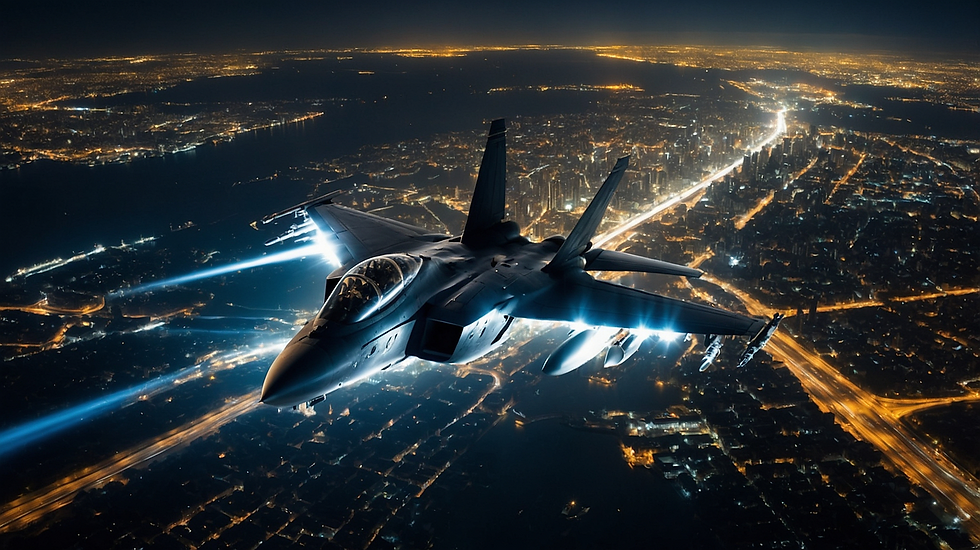
Military and Defense is a demanding environment, requiring the most advanced technological devices, the industry has to offer. Semiconductors provide the military with critical advantages by enabling advanced capabilities like precision guidance, secure communications, sophisticated radar, and autonomous systems, offering superior speed, data processing, and miniaturization for systems operating in extreme environments (radiation, temperature) where reliability is paramount for national security and mission success.
Semiconductors are the indispensable "brains" of modern military and defense systems, powering everything from guided missiles and radar to secure communications, satellites, and drones, requiring specialized, highly reliable chips that withstand extreme conditions (radiation, temperature, shock) unlike commercial ones, making them a critical national security asset and a focus of global technological competition. These defense-grade chips enable "smart" systems for precision, connectivity, and electronic warfare, driving innovation in areas like space-based assets, AI-driven defense, and advanced sensing.
At Zener Engineering, we deliver electronic warfare devices with gallium arsenide (GaAs) and gallium nitride (GaN) technologies that can deliver high-performance to meet today's mission-critical challenges with scalability, reliability, and quality.
Zener Core Competencies In Military & Defense
Revolutionizing Military & Defense With Semiconductors
At Zener Engineering, we offer services in rugged embedded systems, secure communications, and next-generation avionics, and much more. Our patented RF Wireless technology on energy-saving frequency waves, is just one of many patents we have to our name, which we leverage to deliver high-quality electronic warfare devices, in addition to providing services in the following:
Extreme Environment Hardening:
-
Radiation Hardening: Developing processors (often using SOI technology) and components that withstand space and high-altitude radiation for 15+ years.
-
High-Temperature/Power: Utilizing Gallium Nitride (GaN) and Silicon Carbide (SiC) for high-frequency, high-power radar, EW, and power management systems.
Security & Reliability:
-
Secure Cryptochips: Integrating physical anti-tamper mechanisms (e.g., self-erasing data) and resistance to side-channel attacks for secure communications.
-
High-Reliability Components: Producing robust data converters, amplifiers, and MEMS for uninterrupted performance in harsh conditions (avionics, combat vehicles).
-
Cyber Resilience: Embedding security into hardware for data protection, threat detection, and secure network infrastructure.
Advanced Processing & Autonomy (AI/ML):
-
AI Edge Processors: Enabling autonomous drones (UAVs) and systems to make real-time decisions on sensor data without cloud dependency.
-
High-Speed Processing: Powering C4ISR (Command, Control, Communications, Computers, Intelligence, Surveillance, and Reconnaissance) for rapid data analysis and decision-making.
System Integration & Platforms:
-
Avionics & Flight Control: Chips for fighter jets, satellites, and UAVs, handling navigation, communication, and electronic warfare.
-
Radar & EW: Signal processing, jamming, and countermeasures in advanced radar and electronic warfare suites.
-
Secure Communications: Chips for reliable, encrypted data transfer across defense networks and satellite links.
Military Embedded Radio Systems
Technology for The Most Reliable and Secure Systems
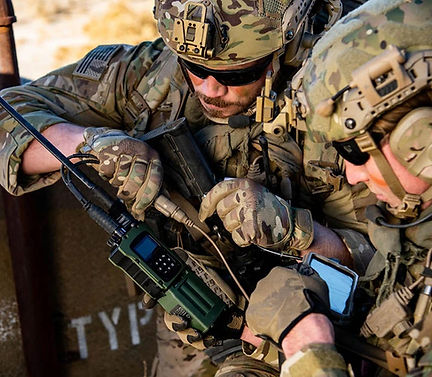
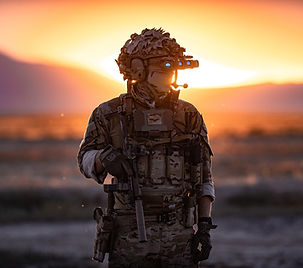
Military embedded radio systems are specialized, rugged computer-and-software systems integrated directly into defense hardware for secure, reliable, high-speed tactical communications, processing data for radar, EW, C4ISR, and enabling functions like encryption, noise filtering, and jam resistance in harsh battlefield conditions, ensuring real-time situational awareness.
Using the latest and most advanced technology is critical in the military and defense fields, as most of the latest technologies depend on embedded systems and computing to support the specific needs of the military. Unlike general-purpose embedded systems, military embedded systems must be more secure, reliable, and rugged compared to civilian general-purpose embedded systems. To withstand harsher circumstances, such as terrorism or hacking, devices should be developed from only trustworthy and experienced manufacturers for use in such a rough environment, to prevent unauthorized access. Here at Zener Engineering, we are bringing in 25 years of experience, especially in the field of AeroSpace and Defense, using only top-quality materials to bring the military and defense fields the latest secure devices.
Key Characteristics
-
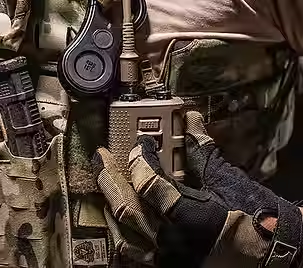
Rugged & Reliable: Built to MIL-STD specifications, they withstand extreme temperatures, shock, vibration, and moisture.
-
Secure: Feature advanced encryption and decryption for secure data transmission, protecting sensitive information from interception.
-
High-Performance: Process vast amounts of data quickly for real-time awareness, supporting ISR, EW, and command/control.
-
Software-Defined: Often use software-defined radio (SDR) for flexible, multi-channel, and multi-frequency operations.
-
Mission-Critical: Perform essential functions within larger systems like drones, aircraft, vehicles, and soldier gear.
Core Functions
-
Tactical Communication: Secure voice and data links between personnel, vehicles, and command centers.
-
Electronic Warfare (EW): Jamming, spoofing, and signal intelligence (SIGINT).
-
C4ISR: Command, Control, Communications, Computers, Intelligence, Surveillance, and Reconnaissance.
-
Navigation: Integration with GPS for precise positioning.
-
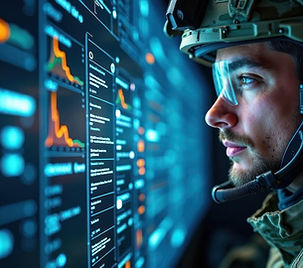
Payload Processing: Handling data from sensors on UAVs and surveillance systems
Applications
-
Command and Control (C2): Providing the means for commanders to monitor operations and issue commands.
-
Intelligence Gathering: Eavesdropping on enemy communications, processing radar emissions, and handling massive volumes of data from surveillance satellites.
-
Navigation: Used in GPS systems to determine precise locations and track movements.
-
Electronic Warfare (EW): Enabling electronic support, defense (jamming protection), and attacks (jamming enemy communications) by disrupting the enemy's use of the electromagnetic spectrum.
-
Dismounted Soldier Systems: Lightweight, tactical networking radios used by personnel on the ground.
Military Satellite Communication Solutions

Military Operations That Take Technology Out to Orbit
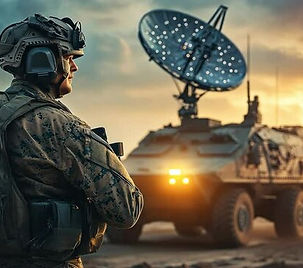
Military Satellite Communications (SATCOM) is a specialized system where satellites transmit signals back and forth for long-distance, secure communications. Due to the complex nature of military operations, more sophisticated systems are needed to bypass obstructions over long distances that limit communication lines, across land, sea, and air. SATCOM achieves this by transmitting radio traffic into a satellite in space above the Earth’s orbit. Radio waves going up towards a satellite in space avoid obstacles along their path on the ground. When the signal reaches the satellite, it’s sent back down to the recipient on Earth. SATCOM solutions provide secure, resilient, global communication for forces, enabling real-time command, control, and data (voice, video, intel) from contested zones to remote areas, using networks like MUOS and WGS for assured connectivity, and evolving towards joint enterprises to counter modern threats with smaller, faster, and more interoperable systems.
Military SATCOM is at the core of relaying and receiving mission-critical information in time without interference. Radio waves transmit in a straight line and can be weakened by obstacles along the signal’s trajectory. SATCOM gets around obstacles by sending signals to and from a space satellite to remove interference.

Key Characteristics
Security and Protection
-
Low Probability of Interception and Detection (LPI/LPD): Systems are designed to make communication signals difficult for adversaries to detect, intercept, or jam.
-
Encryption: Advanced encryption methods are employed to secure sensitive data transmissions, with technologies like quantum encryption being explored for future use.
-
Anti-Jam Features: Techniques like spread-spectrum and frequency hopping are used to provide high interference rejection and enable continued operations during jamming attempts.
-
Cybersecurity Defenses: Networks incorporate multilayered intrusion detection systems and rapid response mechanisms to counter hacking and espionage.
Reliability and Survivability
-
Assured and Survivable Communications: MILSATCOM systems are designed to function effectively under all circumstances, including extreme weather conditions and even nuclear effects (e.g., hardened components).
-
Redundancy and Resilience: A multi-orbit architecture utilizing satellites in Low Earth Orbit (LEO), Medium Earth Orbit (MEO), and Geostationary Orbit (GEO) ensures that if one satellite or orbit is compromised, others can take over seamlessly.
-
Inter-satellite Crosslinks: Many military satellites can communicate directly with each other via crosslinks, reducing reliance on vulnerable ground relay stations.
-
Autonomous Operation: Some future systems will leverage AI and machine learning for autonomous operation, enabling self-organization and adaptation to dynamic mission requirements without continuous human C2.
Operation Flexibility and Performance
-
Global and Wide-Area Coverage: Satellites provide seamless, beyond-line-of-sight communication across vast distances and remote areas (including polar regions), which is critical for coordinating globally dispersed forces.
-
Multi-Band/Multi-Waveform Capability: Systems operate across various frequency bands (UHF, X-band, Ka-band, EHF) to balance different needs, such as high capacity, weather resistance, and small terminal size.
-
High Data Rates: Modern systems are designed to handle large volumes of data, including high-definition video, imagery, and real-time intelligence data, at high speeds.
-
Mobile and Deployable Terminals: A wide range of user terminals, from fixed stations to manpack and vehicle-mounted systems, are designed for rapid deployment and use in the field.
-
Onboard Processing: Advanced satellites often perform communication processing and network routing onboard, enhancing system efficiency and security

Core Functions
-
Secure and Reliable Connectivity: Establishing secure, resilient, and reliable communication channels for military forces across vast distances, often in austere environments where terrestrial networks are unavailable. This connectivity ensures a low probability of interception and detection through robust encryption and anti-jam features.
-
Command and Control (C2): Enabling commanders to exert real-time command and control over dispersed tactical forces, aircraft, naval vessels, and unmanned systems (UAVs).
-
Real-time Situational Awareness: Facilitating the rapid transfer of high-volume data, including high-resolution imagery, video, and sensor data, to create a unified and accurate picture of the battlefield for informed decision-making.
-
Intelligence Gathering (ISR Support): Acting as a crucial component for Intelligence, Surveillance, and Reconnaissance efforts by relaying data from various sensors and platforms, allowing for the tracking of adversary movements and activities.
-
Navigation and Positioning Support: While dedicated navigation satellites like GPS provide the primary positional data, SATCOM systems assist in ensuring the integrity and delivery of this crucial information for navigation and precision-guided munitions.
-
Operational Flexibility and Mobility: Supporting highly mobile platforms, including ground vehicles, aircraft, ships, and dismounted troops, with communications-on-the-move capabilities, bypassing physical obstructions like mountains or urban areas that hinder line-of-sight radio.
-
Resilience and Redundancy: Employing multi-orbit architectures (LEO, MEO, GEO) and robust anti-jamming technologies to ensure operational continuity and prevent single points of failure in the face of physical or cyber disruptions.
Applications
-
Command and Control (C2): SATCOM enables commanders to maintain control over widely dispersed forces (land, sea, air, and space) across vast distances, facilitating real-time coordination of military operations.
-
Intelligence, Surveillance, and Reconnaissance (ISR): Satellites collect and transmit critical intelligence data, including high-resolution imagery and electronic signals intelligence (SIGINT), to ground stations and command centers, enhancing situational awareness and mission planning.
-
Navigation and Positioning: Systems like the Global Positioning System (GPS), initially developed for military use, rely on satellites to provide precise location and timing data essential for navigation, troop movements, and the guidance of precision munitions.
-
Early Warning Systems: Space-based infrared systems detect missile launches and nuclear detonations, providing critical early warning to enable defensive responses.
-
Unmanned Systems (UAVs, UGVs): Drones and other autonomous vehicles are often controlled via satellite links, allowing for beyond-line-of-sight operations with minimal risk to personnel.
-
Logistics and Asset Tracking: Real-time tracking of personnel, vehicles, aircraft, and supplies ensures efficient logistics and force protection in the field.
-
Weather and Environmental Monitoring: Satellites provide crucial weather data and monitor environmental conditions, which are vital for planning and safely executing military operations.
-
Secure Communications: Military SATCOM systems use advanced encryption, anti-jamming technologies (like frequency hopping), and low probability of interception/detection features to protect sensitive information from adversarial interference in contested environments.
-
Humanitarian Assistance/Disaster Response: In the aftermath of natural disasters, when terrestrial networks are often destroyed, military satellites provide essential communication links for coordinating rescue and relief efforts.
5G Solutions for Military
Enhanced Performance for Real-Time Solutions
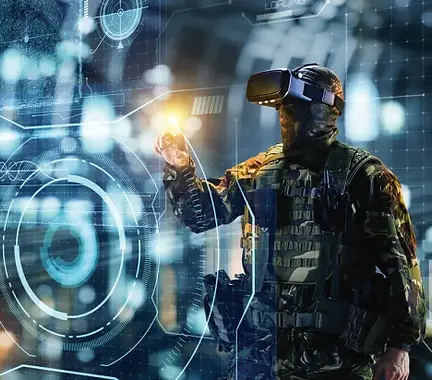
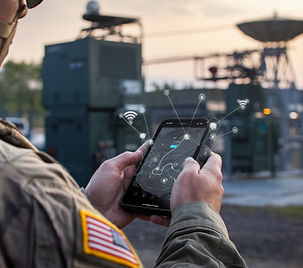
In military warfare situations, having robust, secure, and highly adaptable communication systems determines the success of missions in the modern battlefield landscape. Military 5G solutions are important in the military because it leverage 5G's high speed, low latency, and massive capacity to create secure, private, and portable networks for enhanced battlefield awareness, autonomous systems, and immersive training, enabling real-time data for C4ISR (Command, Control, Communications, Computers, Intelligence, Surveillance, Reconnaissance) and logistics through technologies like mobile command hubs, drone swarms, and AR/VR training.
Key Characteristics
-
Ultra-Reliable, Low-Latency Communications (URLLC): This is perhaps the most critical characteristic, offering response times as low as 1 millisecond. This near-instantaneous connectivity is vital for real-time command and control, remote operation of autonomous vehicles and drones, and applications like battlefield telesurgery, where delays are unacceptable.
-
High Speed and Wide Bandwidth (Enhanced Mobile Broadband): 5G provides data speeds up to 10 gigabits per second, allowing for the rapid transfer of massive amounts of data, including high-resolution video streams from surveillance drones and sensors. This capability enhances battlefield situational awareness and supports data-intensive AI and machine learning applications.
-
Massive Machine-Type Communications (mMTC): The ability to support over a million connected devices per square kilometer is essential for the "Internet of Military Things" (IoMT). This allows for seamless coordination and data sharing among numerous sensors, unmanned systems, and ground vehicles on a complex battlefield.
-
Enhanced Security and Network Slicing: Military solutions prioritize robust security, embedding encryption and utilizing a zero-trust security framework. A key feature is network slicing, which allows the creation of multiple isolated, virtual networks within a single physical infrastructure. This enables the military to reserve dedicated, highly secure "slices" for mission-critical operations, separating them from less sensitive communications.
-
Hybrid Architecture and Edge Computing: Military 5G is designed with hybrid architectures that integrate new 5G networks with existing legacy military communication systems (like tactical radios and satellite communications). Furthermore, it uses edge computing to process data near the source (at the network's edge) rather than in a centralized cloud, reducing latency and increasing efficiency in remote or contested environments.

Core Functions
-
Enhanced Connectivity and Communications 5G: provides significantly higher bandwidth and lower latency (as low as 1 millisecond) compared to previous generations, enabling rapid and secure information exchange in the field. This is essential for effective command and control (C2), real-time data sharing among different military branches and allies, and resilient communication in contested environments.
-
Real-time Situational Awareness: The low latency and high data transfer rates facilitate real-time intelligence, surveillance, and reconnaissance (ISR) operations. This includes streaming high-resolution video from drones and sensors, enabling immediate data processing and analysis at the network's edge for faster threat detection and response.
-
Support for Autonomous Systems: 5G's reliable and high-capacity network is crucial for the command and control of unmanned aerial vehicles (UAVs), autonomous ground vehicles (UGVs), and robotics. It supports crewed-uncrewed teaming and allows for complex, coordinated maneuvers without risking human lives in hazardous areas.
-
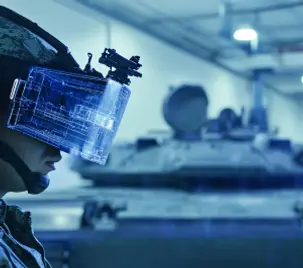
Advanced Training and Simulation: By leveraging augmented reality (AR) and virtual reality (VR) technologies, 5G enables the creation of highly realistic, immersive training environments and simulations. This allows personnel to train on complex equipment and scenarios, improving readiness and skill verification remotely.
-
Optimized Logistics and Smart Bases: Within military installations and forward operating bases, 5G technology is used for smart warehousing, asset tracking, and automated supply chain management to improve operational efficiency and reduce costs. It facilitates the use of Internet of Things (IoT) sensors for monitoring and managing a massive number of connected devices.
Applications
-
Enhanced Command and Control (C2): 5G networks provide seamless and secure communication channels, allowing commanders to make faster, more informed decisions with real-time data from the field. This supports concepts like Joint All-Domain Command and Control (JADC2), which unifies sensors and shooters across all domains (land, sea, air, space, and cyber).
-
Intelligence, Surveillance, and Reconnaissance (ISR): High bandwidth allows for streaming of high-resolution video from sources like drones and fixed cameras, improving battlefield situational awareness. AI and edge computing can process this data locally in real-time to provide actionable insights.
-
Autonomous Systems and Robotics: The ultra-low latency of 5G (as low as 1 millisecond) is crucial for the real-time coordination and control of unmanned aerial vehicles (UAVs), unmanned ground vehicles (UGVs), and autonomous logistics robots. This reduces risk to human operators and increases operational efficiency.
-
Augmented Reality (AR) and Virtual Reality (VR) Training: 5G enables immersive and realistic training environments and mission rehearsals by supporting AR/VR devices with high bandwidth and low latency. It can also facilitate remote guidance from specialists during complex tasks or medical procedures.
-
Smart Warehousing and Logistics: At military bases and logistics hubs, private 5G networks are used to automate inventory management, track supplies, and streamline the supply chain process, increasing efficiency and readiness.
-
Telemedicine/Remote Healthcare: 5G supports secure, reliable telemedicine applications, allowing for remote patient monitoring, medical data transmission, and even robotic-assisted surgeries in field hospitals or remote locations.
-
Tactical and Expeditionary Networks: The military can rapidly deploy private, portable 5G networks in remote or contested environments where traditional infrastructure is unavailable. These "network-in-a-box" solutions provide secure, localized connectivity for mission-critical operations.
-
Internet of Military Things (IoMT): 5G provides the underlying connectivity for a massive network of interconnected devices and sensors, including soldier-wearable devices, vehicle sensors, and surveillance systems, which collect data to improve monitoring, asset tracking, and overall decision-making.
Software Defined Radio (SDR) for Military
Radio Communication for the Next Level
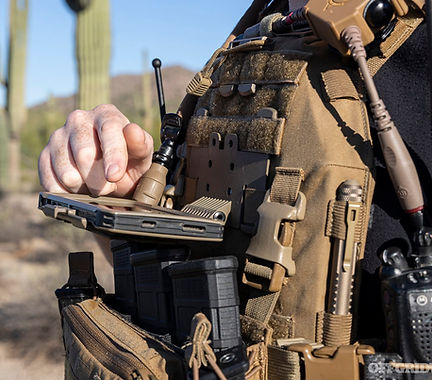
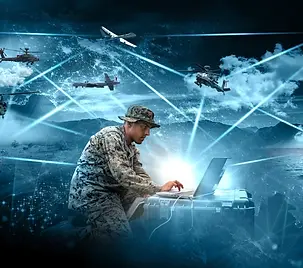
In the military, Software-Defined Radio (SDR) is a radio system that uses software for core functions, like modulation, filtering, and encryption, instead of fixed hardware, allowing soldiers to rapidly change frequencies, waveforms and capabilities by just loading new software onto a single hardware platform. This enables a secure, adaptable, multi-functional, and future-proof tactical communications, electronic warfare, and situational awareness in dynamic battlefield environments, supporting voice, data, and video seamlessly.
SDR is also used to monitor communications on several different frequencies, including VHF, UHF, and HF. Several different protocols, such as CDMA, GSM, Bluetooth, WiFi, and LTE can be operated at the same time while being combined with the ability to monitor a large portion of the spectrum while supporting these protocols. That being said, at the present time, military SDR is facing issues with phase coherency and latency of multiple input/multiple output (MIMO) systems.
Key Characteristics
-
Interoperability: SDRs can run different waveforms simultaneously and support multiple communication standards (including legacy and allied systems), ensuring seamless communication across diverse platforms, branches of military and coalition forces.
-
Frequency and Spectrum Agility: The ability to dynamically switch between different frequency bands (HF, VHF, UHF, SATCOM, etc.) and modulation schemes helps avoid detection, counter-jamming attempts, and adapt to congested or contested electromagnetic environments.
-
Security and Electronic Warfare (EW): SDRs are vital for secure communications, incorporating advanced, often embedded, encryption standards (e.g., AES-128, AES-256). They are also crucial for electronic warfare, enabling signal intelligence (interception and analysis) and signal jamming capabilities.
-
Upgradability and Future-Proofing: New features, waveforms, and protocols can be added through software updates and firmware changes without needing new hardware, reducing lifecycle costs and extending the lifespan of the equipment.
-
Size, Weight, and Power (SWaP) Optimization: By consolidating the functions of multiple traditional radios into a single, software-driven device, SDRs significantly reduce the size, weight, and power requirements, which is critical for soldier-worn gear, unmanned systems (UAVs and robotics), and vehicles.
-
Ruggedness and Reliability: Military SDRs are designed to operate in harsh environmental conditions, meeting stringent military standards for shock, vibration, temperature, and moisture (e.g., MIL-STD-810).
-
Multi-Domain Capability: A single SDR platform can be deployed in ground stations, vehicles, aircraft, and ships, supporting line-of-sight (LOS) and beyond-line-of-sight (BLOS) communications, radar systems, and satellite navigation.

Core Functions
Waveform & Frequency Agility:
-
Rapid Reconfiguration: Change operating modes (voice, data, video) and frequencies on-the-fly, adapting to dynamic threats or network needs without hardware changes, using software profiles.
-
Multi-Waveform Support: Run multiple communication standards (e.g., SINCGARS, HAVE QUICK, SATCOM) on one device, essential for interoperability.
Secure & Resilient Communications:
-
Embedded Cryptology: Integrate advanced encryption directly into the software for secure voice and data transmission.
Anti-Jamming: Software-based filtering and frequency hopping counter interference and electronic warfare (EW).
-
Situational Awareness (ISR):
-
Sensor Integration: Turn radios into environmental sensors, detecting threats, identifying enemy signals, and mapping the RF spectrum using machine learning on DSP outputs.
Data Fusion: Combine voice, video, and tactical data for a unified picture of the battlefield.
-
Command & Control (C2):
-
Network Centricity: Support IP-based networks and connect disparate forces (ground, air, sea, space) for unified command.
Mission Adaptability: Quickly load new mission-specific software for new operations, platforms, or coalition partners.
-
Reduced Size, Weight, & Power (SWaP):
Consolidation: One SDR replaces multiple traditional radios, reducing equipment load for soldiers and platforms
Applications
-
Tactical Battlefield Communications: SDRs are used in handheld, vehicular, airborne, and shipboard applications, providing reliable voice and data transmission across different frequency bands (HF, VHF, UHF) and terrains.
-
Electronic Warfare (EW): The flexibility of SDR allows for signal interception, analysis, and jamming of enemy communications. Advanced features like frequency hopping help secure friendly communications against adversarial disruption.
-
Intelligence, Surveillance, and Reconnaissance (ISR): SDR sensors can monitor the entire RF spectrum, collect signals intelligence (SIGINT), and geolocate signals of interest, transforming raw data into actionable intelligence in real-time.
-
Satellite Communications (SATCOM): SDRs interface with satellite networks for beyond-line-of-sight (BLOS) communication, which is critical for global command and control systems.
-
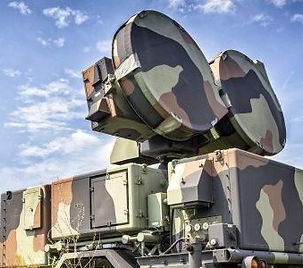
Radar Systems: SDR technology is applied to radar systems, allowing for rapid frequency switching and signal processing capabilities for target tracking and identification.
-
Unmanned Vehicles: SDRs provide robust data links for command and control of unmanned aerial vehicles (UAVs) and other robotic systems, particularly in remote areas.
-
Air Traffic Control (ATC): Military ATC uses SDRs for clear and secure voice communications in air operations.
-
Interoperability: Military forces from different countries or branches often use varying communication standards. SDRs can be reprogrammed with different waveforms (e.g., NATO standards like SATURN and Link 22, or U.S. standards like the Soldier Radio Waveform) to ensure seamless communication between disparate units.
-
Adaptability and Future-Proofing: The ability to update radio functionality via software means military communication systems can rapidly adapt to new threats, evolving standards, and emerging technologies without requiring costly hardware replacement.
-
Reduced Size, Weight, and Power (SWaP): A single SDR can replace multiple specialized analog radios, reducing the equipment load for soldiers and power requirements for vehicles and aircraft.
-
Enhanced Security: Advanced encryption and security protocols can be implemented and updated via software, providing highly secure and confidential communication channels essential for mission success.