



Phased Array Technology
Semiconductors in Phased Array Technology

Communications In The Next Level
The world is constantly evolving technologically, demanding speed, performance, and reliability. Semiconductors play a vital role in bringing phased array antennas to a whole new level in RF (Radio Frequency) communications. Phased array antennas offer several advantages over traditional antennas because phased array antennas offer faster scanning, greater flexibility, and enhanced reliability in applications from radar and 5G to satellite communications. Phased array technology uses multiple antenna elements to electronically steer a beam, allowing for rapid, precise control without physical movement, creating focused energy through constructive/destructive interference, while traditional antennas use only a single large element or mechanical dish. This enables simultaneous functions like tracking multiple targets, enhancing situational awareness, and supporting applications in radar, satellite communication, weather monitoring, medical imaging (ultrasound), and autonomous vehicles.
Semiconductors are fundamental to modern phased array technology, enabling electronic beam steering through integrated circuits (ICs) that control phase, amplification, and switching for each antenna element, moving from bulky mechanical systems to compact, powerful Active Electronically Scanned Arrays (AESAs) for radar, 5G, and lidar, using materials like Silicon (Si), Gallium Arsenide (GaAs), and Gallium Nitride (GaN) for high-frequency performance.
Zener Core Competencies in Phased Array Technology

Zener Engineering...Superior Design in Phased Array Technology
At Zener Engineering, we have the following core competencies and provide services in the following:
Core Technical Competencies
-
Beamforming and Beam Steering: Expertise in electronic manipulation of signal phases to create a focused main beam that can be rapidly steered without mechanical movement. This allows for high-speed scanning and tracking of multiple targets simultaneously.
-
Signal Processing and Data Analysis: Advanced digital signal processing for managing complex time delays and amplitude adjustments for each element, as well as interpreting the resulting rich data (e.g., creating 2D/3D images in ultrasonic testing).
-
Interference Mitigation: Expertise in creating nulls in the antenna or sensor pattern to actively suppress unwanted signals, interference, or jamming from specific directions.
-
Array Design and Material Science: Knowledge of designing the physical array configuration (linear, planar, etc.), selecting appropriate materials (e.g., piezoelectric transducers for ultrasound, RF components for antennas), and integrating components like phase shifters, amplifiers, and attenuators.
Core Application-Specific Competencies
-
System Integration: Integrating phased array systems into larger platforms, such as aircraft, ships, ground stations, or industrial inspection systems, ensuring compatibility and reliable performance.
-
Software Development and Control: Expertise in developing the software that controls the array's functions, enabling real-time adjustments and mission flexibility.
-
Non-Destructive Testing (NDT) Expertise: For the NDT field, competency in skilled operation and interpretation of Phased Array Ultrasonic Testing (PAUT) for applications like weld inspection, corrosion detection, and material analysis in various industries (e.g., aerospace, oil & gas).
-
Domain Knowledge: Specialized knowledge related to the application domain, such as radar principles for defense and automotive use, communication protocols for 5G/satellite communications, or specific inspection codes and standards for industrial use.
-
Modeling and Simulation: The use of software tools to accurately model and simulate beam characteristics, focal laws, and wave propagation through various mediums (including complex or irregular geometries) to optimize performance for specific applications
Role of Semiconductors in Phased Array Technology
Radio Frequency Strength With Semiconductor Technology
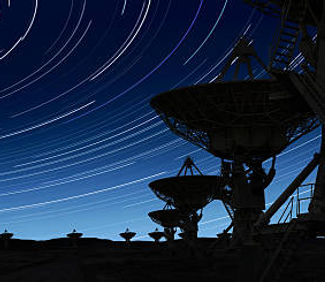
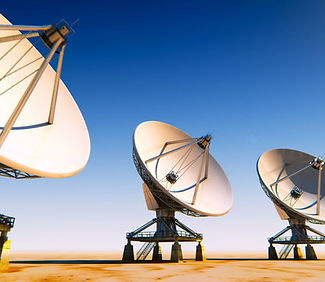
Phased array technology is where a group of antennas that work together, acting as one antenna to steer, change the direction, and shape of radiated signals called "beamforming" without any physical movement of the antennas. In phased array technology, antennas can range from a few emitters to thousands, achieving improved signal strength, gain, directivity, and performance over individual antennas.When signals emitted from each emitter in the phased array are perfectly in phase, they will interfere constructively and produce intense radiation. A computer adjusts the delay for each element, making waves combine constructively in one direction (forming a strong beam) and cancel out in others, allowing for rapid steering, multiple beams, and tracking many targets simultaneously, crucial for modern radar, 5G, and satellite comms. Modern phased arrays have moved from bulky "plank" architectures to flat-panel designs. In these systems, highly integrated semiconductor ICs are mounted directly on the back of the antenna PCB, enabling portable and airborne applications that were previously impossible.
Key Characteristics
-
Electronic Beam Steering: Achieved by controlling the phase and amplitude of signals sent to individual antenna elements, directing the combined beam electronically without physically moving the antenna.
-
Beamforming: The process of combining signals from multiple elements to create a single, high-gain, directional beam through constructive interference, while unwanted signals are canceled via destructive interference.
-
Multiple Elements: Consists of an array of smaller, individually controlled antenna elements (e.g., microstrip patches) arranged in a pattern (linear, planar).
-
No Moving Parts: Eliminates mechanical components, leading to higher reliability, less maintenance, and faster operation compared to traditional antennas.
-
Electronic Focusing: Allows for adjusting the beam's shape and focal point at different depths, improving signal quality and detection, especially in NDT (Non-Destructive Testing).
-
Multiple Beams: Can generate and steer multiple beams simultaneously, allowing for simultaneous tracking of multiple targets or tasks.
-
Signal Processing: Relies heavily on sophisticated signal processing to manage phases, amplitudes, and data, forming the core of its functionality.
Core Functions
-
Electronic Beam Steering: The primary function, allowing the beam's direction to be changed instantly by adjusting the timing (phase) of signals sent to each element, eliminating slow mechanical rotation.
-
Beamforming: Combining signals from multiple elements (constructive interference) to create a focused, high-gain beam in a desired direction, and canceling signals (destructive interference) in unwanted directions.
-
Multiple Beam Generation: Creating several independent beams simultaneously from a single array, enabling communication or tracking of multiple targets at once.
-
Beam Shaping: Modifying the beam's shape (width, focus) by adjusting the amplitude (and phase) of signals to each element, optimizing performance for specific tasks like focusing on a defect or spreading coverage.
-
Interference Suppression (Null Steering): Creating "nulls" (areas of zero signal) in specific directions to block unwanted jamming signals or background noise, improving signal quality.

Applications
Defense & Aerospace
-
Radar Systems: For surveillance, tracking aircraft, missiles, and space debris, replacing slower mechanical systems.
-
Missile Guidance: Enhancing accuracy for interceptors and offensive systems.
-
Electronic Warfare: Jamming enemy signals and protecting friendly ones.
-
Spacecraft: Communication with satellites and deep-space probes.
Telecommunications & Networking
-
5G/6G: Beamforming for high-capacity, reliable data transfer in cellular networks.
-
Satellite Internet: Providing stable links for constellations like Starlink.
-
WiFi: Smart access points for better coverage.
Automotive
-
Autonomous Vehicles: Advanced radar for obstacle detection, distance estimation, and environment scanning.
Medical
-
Imaging: High-resolution ultrasound and MRI applications.
-
Therapeutics: Targeted cancer treatment using focused energy.
Industrial & Scientific
-
Non-Destructive Testing (NDT): Inspecting welds, pipes, and structures for cracks, corrosion, and flaws.
-
Weather Research: More detailed and faster atmospheric monitoring.
-
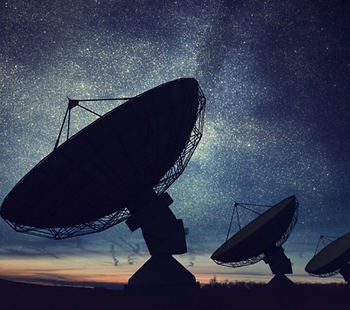
Radio Astronomy: Analyzing cosmic signals with high precision.
-
Human-Machine Interfaces (HMI): Creating tactile feedback using airborne ultrasound.
Different Types of Phased Array Technology

Phased Array Systems With Variety
Phased array antennas are classified mainly by their transreceiver architecture into four main broad categories....that is:
Passive Electronically Steered Array (PESA):
A central or single transmitter sends power to the entire antenna array, which uses phase shifters at each element to steer the beam without mechanical movement; simpler but less flexible.
Active Electronically Steered Array (AESA):
Each element has its own transmitter and receiver module, allowing independent control, simultaneous beams, and higher performance, common in advanced military systems. AEAS systems allow for greater flexibility than PESA because AESA can transmit multiple beams simultaneously, operate across different frequencies, and offer improved reliability since the failure of a single element does not disable the entire array.
Digital Beam Forming (DBF):
Digitizes signals at each element for precise, flexible control, enabling complex beamforming and multiple simultaneous beams. The received RF signals are converted into digital data at the element level and then processed using digital signal processing hardware, such as a Field Programmable Gate Array (FPGA).
Hybrid Beam Forming (HBF):
Hybrid Beam Forming systems combine features of both analog and digital beam forming. This technique creates focused signals (beams) efficiently by using fewer Radio Frequency (RF) chains than antennas, reducing cost and power while maintaining flexibility for multiple users or targets, a smart middle-ground solution. It splits the antenna array into subarrays, uses analog beamforming (phase/amplitude shifts at the RF level) within these groups, and then uses digital beamforming (digital processing) on the signals from these subarrays to form the final narrow beams.
This classification is then further broken down into three categories, which are based on the arrangement of individual antennas and the number of phase shifters:
Linear Array (1D):
The array elements are placed in a straight line with a single-phase shifter. Even though the antenna arrangement is simple, the beam steering is limited to a single plane. The vertical arrangement of several linear arrays forms the flat antenna.
Planar Array (2D:)
The antenna elements are arranged on a flat surface (a planar structure) and can be steered in both elevation and azimuth angles to cover the entire space above the antenna.
Frequency Scanning Array (3D):
The antenna elements are arranged across a volume, allowing the steering of one or more beams in any direction.
Components of Phased Array Antenna BeamFormer
Superior Innovative Design in Radio Frequency Technology
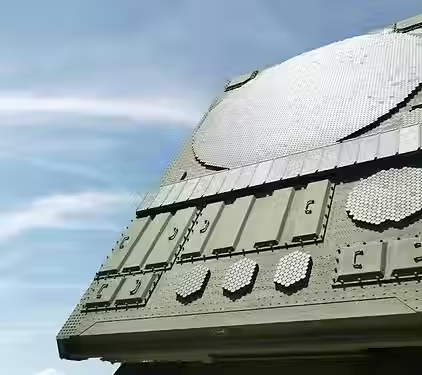
Phased array antennas are advanced antenna systems that utilize the principle of constructive and destructive interference to steer a beam of radio waves electronically. A phased array beamformer's core components manipulate signals for each antenna element to steer a beam electronically, primarily using phase shifters (to control timing/direction) and attenuators (for amplitude tapering/beam shaping), offering significant advantages over traditional mechanical steering, which involves physically rotating the antenna.
Phased array antenna systems are complex systems that use power electronics, RF components, and antenna designs in a single powerful system. This is why it is important to understand how engineers configure phased array antenna systems and which applications are best suited for this technology. Here at Zener Engineering we pride ourselves on having the the knowledge, experience and expertiese in the following components that phased array antenna beamformers consist of:

Antenna Elements
Numerous small antennas (radiators) arranged in a grid, each transmitting or receiving a part of the overall signal.
Phase Shifters
Crucial components at each element that electronically delay or advance the signal's phase, controlling the beam's direction (steering).
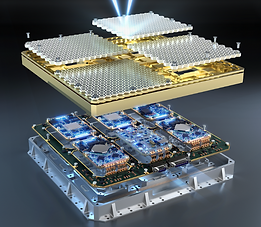
Beam Controller
A central unit that calculates and sends precise control signals to each phase shifter.
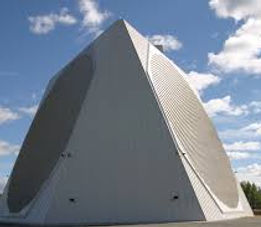
Transmit/Receive
In active arrays (AESAs), these integrated units sit at each element, containing:
-
Power Amplifiers (PAs): Boost the signal for transmission.
-
Low-Noise Amplifiers (LNAs): Amplify weak received signals.
-
Attenuators: Taper the beam's power.
-
Switches: Toggle between transmit and receive modes.

Power Combiners
Combine signals from all elements (for reception)

Power Dividers
Split the input signal from a single source into multiple identical signals for the array (for transmission).
Advantages of Phased Array Technology
Getting A Superior Edge on Communications
With phased array technology, a more intense emission of radiatioin can be directed for beamforming over a broad single range. This allows for superior transmission to compensate for any loss incurred during transmission, since phased array antennas have the ability to beamform at high frequencies. With phased array technology, the collectective signal or raditation pattern and the individual signals from the radiator combined, provide superior communications, which are helping to drive advancements in the communication sector.
Other advantages of phased array technology is that it offers electronic beam steering with no mechanical parts, enabling faster, more agile scanning and complex shape inspection. Other key benefits of phased array technology include superior flaw detection and characterization (NDT), improved reliability, reduced size/weight/power (SWaP) for mobile systems, multi-mission capability, and enhanced data rates for communications. This leads to faster inspections, lower costs, better situational awareness in radar, and more reliable connectivity in communications
Key Advantages
-
Electronic Beam Steering & Focusing: Directs beams electronically without physical movement, allowing for rapid, precise changes in direction and focus, crucial for tracking fast objects or inspecting complex geometries.
-
Faster & More Efficient Inspections: Reduces setup time, eliminates probe changes, and provides instant, high-resolution data, significantly speeding up non-destructive testing (NDT) and reducing downtime.
-
Improved Detection & Characterization: Creates detailed internal images, enabling precise flaw sizing and location, leading to higher probability of detection (POD) and better diagnostics.
-
Enhanced Reliability & Versatility: Redundancy from multiple elements improves resilience, while a single transducer can perform multiple tasks (scan angles, focus depths), simplifying equipment.
-
Reduced Size, Weight, & Power (SWaP): Compact designs are ideal for mobile platforms like drones, aircraft, and satellites, notes this article from Analog Devices.
-
Multi-Mission Capability: A single array can perform various functions simultaneously, such as tracking multiple targets or handling different communication frequencies.

Applications
-
Radar: Faster target acquisition, better situational awareness for defense, autonomous vehicles (collision avoidance), and weather forecasting.
-
Non-Destructive Testing (NDT): Weld inspections, power plant maintenance, and aerospace component testing.
-
Communications: Reliable satellite internet (in-flight/remote), 5G networks, and secure military comms.
-
Medical Imaging (MRI): Faster scans and improved image quality with phased array coils.