


Space
Semiconductors in Space Technology
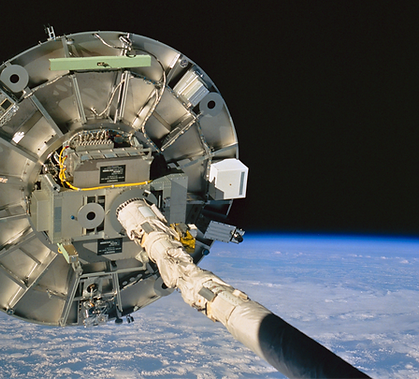
Space Exploration with Advanced Semiconductors
Space exploration has always been of key interest to humans, perhaps because nothing makes humanity wonder in awe as to what mysteries our universe holds. Here on Earth, we have yet to tap into our potential of pushing the boundaries of learning all we can about our universe, which is all dependent on reliable and superior semiconductor technology.
Semiconductors are vital for space exploration, powering everything from satellite communication and Earth observation to deep-space rovers, enabling miniaturization, radiation resistance, and autonomous navigation. They form the core of processors, sensors, memory, and power systems, allowing real-time data processing, global connectivity, and precise control for missions. Future advancements, including manufacturing in microgravity, promise even higher-performance space electronics, driving new discoveries and supporting long-term colonization.
Here at Zener Engineering, we have the knowledge, experience, and the advantage of having one of the most cited engineers in the world within the semiconductor industry to help make superior space exploration a possibility and help further unlock the mysteries of the universe.
Zener Core Competencies in Space Technology

Paving The Way For Space Exploration
The core semiconductor competencies in space technology involve
designing and fabricating highly resilient, reliable, and efficient components capable of operating in extreme environments. Key competencies extend across materials science, specialized design and manufacturing, and system integration for mission-critical functions.
Here at Zener Engineering, we provide services and have the following expertise in space technology:
-
Radiation Hardening & Reliability: Designing chips to withstand high-energy particles and extreme temperature swings, crucial for preventing system failure in space.
-
Power Management: Efficiently regulating and distributing power using advanced MOSFETs, GaN, and solar cell tech for long-duration missions.
-
Miniaturization & Integration (3D ICs): Packing more functionality into smaller, lighter packages (MEMS, 3D ICs) to reduce launch costs and enable smaller satellites.
-
Advanced Materials (GaN, SiC): Utilizing Gallium Nitride (GaN) and Silicon Carbide (SiC) for superior efficiency and durability in extreme conditions.
-
High-Speed Communication: Developing robust optical/RF components (lasers, amplifiers) for data transmission.
-
Advanced Processing: Integrating AI/ML for autonomous fault detection, energy management, and real-time decision-making, plus exploring quantum computing.
-
Precision Sensing & Imaging: Creating highly sensitive semiconductor sensors for navigation, mapping, and scientific data collection.
Role of Semiconductors in Space Exploration

Semiconductors.....The Key to Unlocking the Mysteries of The Universe
Semiconductors are the fundamental "brains" and "nervous system" of modern space exploration, enabling everything from the autonomous navigation of Mars rovers to the global connectivity provided by satellite constellations. When it comes to using semiconductors in space exploration, we have to go several steps further in applying what is known as a "Space Semiconductor", also known as radiation-hardened or RAD-Hard. This is a very specific type of semiconductor, different from traditional semiconductors, because space semiconductors are designed with multiple layers of protective materials such as radiation-tolerant materials (GaN), Silicon-on-Insulator (SOI), and error correction for reliability, unlike terrestrial chips. These extra protective layers protect the semiconductors from the harsh environment, extreme temperatures and intense radiation in space.
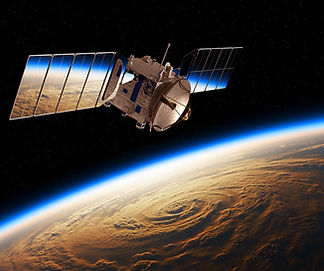
Core Functions
-
Onboard Computing and Autonomy: Semiconductors in the form of microprocessors and memory chips act as the "brain" of spacecraft, handling complex calculations for autonomous navigation, trajectory adjustments, and mission-critical decision-making.
-
Communication: Specialized chips like gallium arsenide (GaAs) and gallium nitride (GaN) power amplifiers and transponders that transmit high-speed data across vast interplanetary distances back to Earth.
-
Power Management: Semiconductor-based solar cells (such as multi-junction GaAs cells) convert sunlight into electricity, while power-management integrated circuits (PMICs) regulate and distribute that energy to all onboard systems.
-
Scientific Sensing: Image sensors (CMOS and CCD) and specialized detectors rely on semiconductor materials to capture high-resolution imagery and scientific data from celestial bodies.
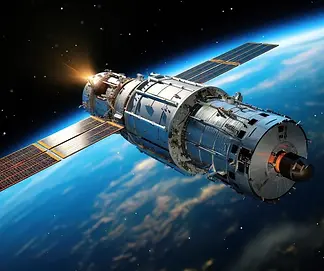
Space-Grade Challenges
-
Radiation Hardening (Rad-Hard): These chips are specifically designed to resist damage from cosmic rays and solar flares, preventing bit-flips or permanent hardware failure.
-
Thermal Resilience: Components must function reliably across extreme temperature swings, typically ranging from -40°C to +125°C or more.
-
Miniaturization: Because weight directly impacts launch costs, semiconductors enable more functionality to be packed into smaller, lighter payloads.
-
Longevity and Reliability:Space missions can last for years, requiring semiconductors that offer exceptional longevity and reliability. Ensuring the durability of electronic components is crucial for the success of long-duration missions, where maintenance and component replacement are impractical or impossible.

Future Trends and Technologies
-
Enhanced Radiation Hardening (Rad-Hard): Critical for surviving cosmic rays, new rad-hard chips offer higher performance, enabling longer, more complex missions and deep-space exploration.
-
Artificial Intelligence & Machine Learning (AI/ML): Onboard AI chips allow spacecraft to process data, make decisions, and adapt in real-time, reducing reliance on Earth-based commands.
-
Advanced Materials (GaN, SiC): Gallium Nitride (GaN) and Silicon Carbide (SiC) provide superior power efficiency, heat management, and durability for extreme space environments.
-
Miniaturization & Integration: Smaller, multi-functional chips (System-on-Chip) power CubeSats and small satellites, reducing size and power while increasing capability.
-
Quantum Computing & Cryptography: Developing quantum-resistant encryption and quantum processors for unprecedented data security and complex problem-solving.
-
Software-Defined Payloads: Reconfigurable Field-Programmable Gate Arrays (FPGAs) allow for flexible, upgradable mission functions in orbit.
-
In-Space Manufacturing: Research into printing and building semiconductors in microgravity could revolutionize supply chains and customization.
How Space Semiconductors differ from Traditional Semiconductors

Pushing Space Exploration with "Space Semiconductors
Space semiconductors or also known as "space-grade", are built for extreme environments, focusing on radiation hardening, wider temperature tolerance for example from -55°C to 125°C (but not limited to only this range) and enhanced reliability against space's harsh conditions (vacuum, vibration) compared to traditional chips, which prioritize cost, speed, and density for Earth's mild climate, often using Wide Bandgap (WBG) materials like GaN for better space performance. While traditional chips are optimized for terrestrial use, space versions undergo rigorous testing and special design (like potting, error correction) to prevent single-event upsets or latch-ups, making them far more expensive but mission-critical.
Space Semiconductors vs Traditional Semiconductors
Feature | Space Semiconductor | Traditional Semiconductor |
|---|---|---|
Cost vs Performance Trade-off | Significantly more expensive due to extensive testing, specialized materials, and hardening.
| Cheaper, focusing on maximum performance/power for Earth-bound tasks. |
Manufacturing and Materials | May use advanced materials (GaN), space-grown crystals for purity, and strict testing. | Focus on mass production, density, and speed, often using standard silicon.
|
Radiation Hardening | Uses specialized materials (like GaN, SOI) and designs to resist radiation-induced errors (SEUs, TIDs) that would fry standard chips. | Not built for space radiation; performance suffers or fails quickly. |
Temperature Extremes | Wider operating ranges from -40°C to 125°C with robust thermal management. | Designed for narrower, more stable Earth temperatures from 0°C to 70°C.
|
Reliability and Longevity | Prioritizes function over decades, with built-in redundancy (like Triple Modular Redundancy) and error correction (ECC) because repairs are impossible. | Shorter expected lifespan, often years, for consumer or terrestrial industrial use. |