


Surveillance
Semiconductors in The Surveillance Industry

Keeping an Eye on Security With Semiconductors
In the semiconductor industry, surveillance encompasses a wide range of monitoring activities, which play a crucial role, since security virtually permeates every industry and aspect of our daily lives. Semiconductors are the backbone of our physical security, such as personal security, the military, national security, cybersecurity, powering the vehicles we drive every day, and sustaining the supply chain for global operations and communications that drive our economy globally, while maintaining quality control. The high value of intellectual property (IP) and the critical nature of the manufacturing process make robust surveillance a necessity for protecting assets and national security interests because the manufacturing process is highly complex and relies on interconnected networks, making it vulnerable to cyber threats. The world around us is constantly changing and evolving, becoming more heavily dependent on advancing technology, and reliance on semiconductors is growing, making quality and reliable components imperative in surveillance systems that will not experience disruptions, where data can be compromised, and impact the safety and reliability of devices, affecting the overall integrity of the supply chain. As security technology continuously advances, the threats on security systems are also getting more sophisticated, so the semiconductor industry has the challenge of constantly staying vigilant and ensuring the resilience of the technologies that shape the evolving landscape of surveillance systems.
Zener Core Competencies in Surveillance

Securing The World With Advanced Semiconductors
Semiconductor core competencies in surveillance revolve around their ability to enable high-speed data processing, provide the foundation for AI and machine learning capabilities, and ensure the security and reliability of surveillance systems. Here at Zener Engineering, we have the following competencies and provide services in the following:
Hardware and Security Primitives:
-
True Random Number Generators (TRNGs) & Physical Unclonable Functions (PUFs): For unique device identification and strong key generation.
-
Secure Execution Environments (TEEs): For protecting sensitive data and code execution.
Secure Design & IP Protection:
-
Hardware Trojans & Tamper Detection: Designing chips resistant to malicious insertion and physical attacks (using sensors, active shields).
-
Cryptography (Hardware & Software): Implementing encryption (AES, Public Key) and secure protocols (secure boot, firmware integrity).
-
System-on-Chip (SoC) Security: Integrating security at the chip level for integrated surveillance solutions.
Advanced Processing & Analytics:
-
GPU/AI Acceleration: Developing chips for efficient AI/ML tasks (object recognition, anomaly detection) in video analytics.
-
Edge Computing Security: Securing sensors and gateways at the network edge.
Data & Lifecycle Management:
-
Data Governance: Managing data integrity, security, and controlled access.
-
Testing & Validation: Rigorous testing for security compliance throughout the product lifecycle.
Cyber-Physical System (CPS) & Supply Chain Security:
-
IT/OT Integration: Bridging digital security (IT) and physical manufacturing (OT) for holistic protection.
-
Supply Chain Resilience: Ensuring security and traceability from design to deployment, preventing counterfeiting or tampering.
Role of Semiconductors in The Surveillance Industry
Quality and Superior Surveillance with Semiconductors
Here at Zener Engineering, as with all our services, semiconductors, when integrated with artificial intelligence (AI), result in superior chip design (IC), which are faster and more efficient. Semiconductor technology is constantly evolving, along with the surveillance industry continuously coming up with more sophisticated ways to enhance security systems, such as enabling the process of intricate algorithms crucial for facial recognition, allowing for swift identification within seconds. Semiconductors are essentially the backbone of virtually every industry that employs technology, allowing for more efficient and sophisticated operations, which can decipher surveillance videos in real-time to identify any suspicious behavior, enhancing surveillance systems and heightening security, whether it is in busy public areas or more secluded, hard-to-monitor areas that would require the use of drones/UAV's.
As semiconductor technology becomes more advanced, IC designs are ushering in a whole new era, paving the way for minuscule chips that can process vast amounts of data, making modification and customization of algorithms more effortless. This allows data to be extracted from diverse sources, such as video feeds, audio recordings, and sensor data, providing a more complete and accurate picture of scenarios and events for investigations.

Key Characteristics
-
Optoelectronics & Sensors: Form the "eyes" of surveillance, including image sensors (CMOS/CCD) for cameras and infrared detectors, converting light/heat into electrical signals, often using Gallium Arsenide (GaAs) for speed.
-
High-Performance Computing: CPUs and GPUs process vast amounts of data for AI, facial recognition, and pattern analysis, requiring parallel processing and fast signal processing.
-
Miniaturization & Integration: Crucial for compact, discreet devices (like body cams, drones) that pack immense power into small footprints.
-
Power Efficiency: Essential for battery-powered or remote devices; Wide Bandgap (WBG) semiconductors like Silicon Carbide (SiC) and Gallium Nitride (GaN) offer greater efficiency and durability.
-
Reliability & Durability: Must withstand extreme temperatures, vibration, and environmental conditions, demanding robust materials and precise manufacturing.
-
Secure Design: Chips incorporate security features (like attestation) to prevent tampering, vital for sensitive data protection in government and critical infrastructure.
-
Customization (Doping):Tailored electrical properties allow precise control for specific functions, from basic signal switching to complex AI inference
Core Functions
-
Intelligent Analysis & Detection: AI-powered chips process complex algorithms for facial recognition, motion detection, and behavioral analysis, identifying threats or anomalies in video feeds.
-
Data Processing & Management: High-performance processors handle massive amounts of multi-modal data (video, audio, sensor data) simultaneously for comprehensive situational awareness.
-
Edge Computing: Specialized chips (like neuromorphic chips) enable on-device processing, allowing security systems to make real-time decisions without constant cloud connection, crucial for drones and smart cameras.
-
Secure Communication: Semiconductor-based wireless modules (Wi-Fi, cellular) provide secure, encrypted data transmission between devices and central systems, preventing interception.
-
Data Security & Integrity: Integrated security features like encryption engines and secure boot protect sensitive footage and system firmware from cyberattacks and unauthorized access.
-
Device Power & Functionality: Essential for powering the sensors, cameras, and connectivity modules in IoT surveillance devices like smart doorbells, trackers, and drones, enabling their core features

Applications
-
Image Sensors & Imaging: High-sensitivity CMOS sensors capture clear HD video, even in low light, for security cameras and drones, crucial for identification.
-
AI & Edge Computing: Specialized AI chips process complex algorithms for facial recognition, behavior analysis, and object tracking directly on devices (at the edge) for faster, more efficient security.
-
Smart Home & IoT Devices: Microcontrollers and sensors in smart doorbells, cameras, and motion detectors enable remote monitoring, data processing, and instant alerts via wireless communication.
-
Data Processing & Security: Secure elements (like FIPS-certified chips) protect video integrity with cryptographic keys, ensuring secure network communication and trusted data for access control systems.
-
Drones & Robotics: High-performance chips manage autonomous flight, obstacle avoidance, and high-resolution video capture for aerial surveillance.
-
Connectivity: Chips support various protocols (Wi-Fi, 5G) for seamless data transfer and enable long-range, low-latency HD video transmission over existing cables.
Different Types of Surveillance
Semiconductors For The Broad Spectrum of Surveillance
Semiconductors are the foundational technology for all modern surveillance, often blending technologies like AI for analysis to monitor individuals, assets, or populations for security, investigation, or commercial purposes, ranging from simple CCTV to complex data mining. Surveillance is a broad category encompassing various sub-categories of surveillance that fall into one of the 6 main types, as in the following, which we here at Zener Engineering provide services for:
-
Covert Surveillance
-
Mobile Surveillance
-
Corporate Surveillance
-
AI-Powered Surveillance
-
Physical Security
-
Electronic and Digital Surveillance
-
Aerial Surveillance
-
Biometric Surveillance
In additoin to the above mentioned types of surveillance, here at Zener we also provide services in:
-
Military & Defense
-
Industrial Automation
-
Drones & Autonomous Systems
-
Wearable & Personal Security
Physical Security
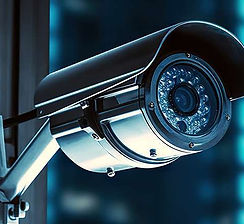
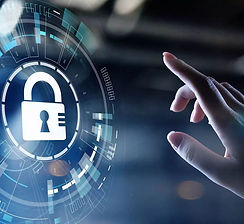
Involves direct observation, using tools like CCTV cameras (static, PTZ, thermal), GPS trackers, drones, and human operatives (undercover agents, guards) for physical observation.
Electronic Security
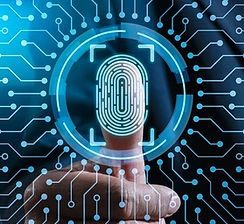
Focuses on digital footprints, including internet monitoring, phone tapping, social media analysis, email monitoring, and tracking digital data.
Biometric Security
Identifies individuals through unique physical or behavioral traits, such as fingerprints, facial recognition, or voice patterns.

Aerial Security
Uses aircraft, satellites, or drones to monitor large areas from above, providing broad visual coverage.
Covert Security
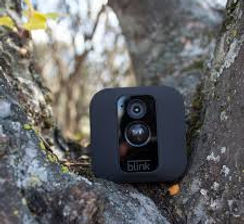
Secret observation without the target's knowledge, often using hidden cameras, audio bugs, or undercover agents.
Mobile Security
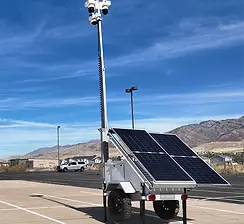
Involves tracking a target's movements across different locations, often using vehicles or foot surveillance.
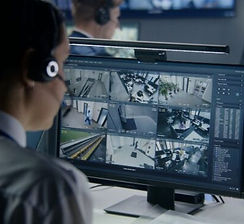
Corporate Security
Internal monitoring of employees' online activity, emails, and access.
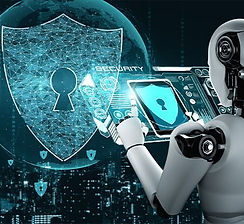
AI-Powered Security
Uses artificial intelligence to analyze vast amounts of data from other methods (like video feeds) for automated detection and pattern recognition.
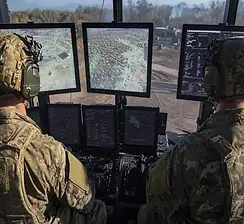
Military & Defense
-
Data Analysis: Powerful AI chips process vast battlefield data (drone feeds, signals) for situational awareness.
-
Communication: Secure, high-speed chips for encrypted command and control.
-
Guidance: Microcontrollers in precision-guided munitions.

Industrial Automation
-
Sensors: Detect temperature, pressure, acceleration to monitor machinery.
-
Control Panels: Processors enable centralized monitoring and rapid response in automated systems.
-
Cybersecurity: Securing operational technology (OT) networks.

Wearable Security
-
Sensors: Monitor biometrics (heart rate, sleep).
-
Connectivity: Manage data transmission to phones (Bluetooth, Wi-Fi).
-
Power Management: Optimize battery life.

Drones/UAV's
-
Navigation & Control: GPS, accelerometers, gyroscopes.
-
AI/ML: Onboard processing for obstacle avoidance, target tracking, autonomous flight.
-
Imaging: Advanced sensors for multi-spectral/thermal imaging
Advantages of Semiconductors in The Surveillance Industry
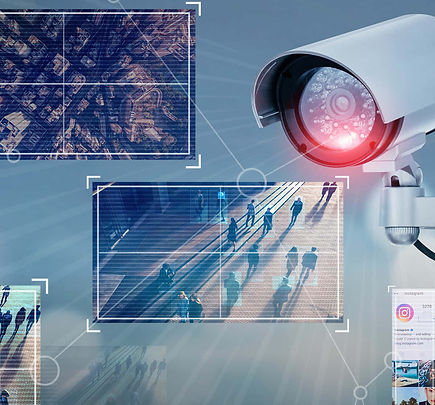
Semiconductors....The Backbone of The Surveillance Industry
Semiconductors are crucial in surveillance for enabling high-speed data processing, image/video analysis (AI), and secure, efficient data transmission, powering everything from cameras and access controls to advanced biometric scanners, allowing for real-time threat detection, enhanced situational awareness, and the development of smarter, more adaptable security systems. Their integration allows for miniaturization, increased performance, and lower power consumption, vital for portable and embedded surveillance devices.
The following are some of the key advantages of how semiconductors help drive the surveillance industry:
-
High-Performance Processing: Chips handle massive amounts of data from multiple sensors (video, audio, biometrics) rapidly, crucial for real-time analysis and decision-making in complex environments.
-
Artificial Intelligence (AI) Integration: Advanced AI chips enable computer vision for object detection, facial recognition, anomaly detection, and predictive analytics, transforming passive recording into active threat identification.
-
Enhanced Connectivity & Transmission: Specialized chips (SerDes, CODECs) facilitate high-definition video transmission over longer distances and lower bandwidths, improving system reach and efficiency, even over traditional coaxial cables.
-
Miniaturization & Efficiency: Semiconductors allow for smaller, more powerful devices, including wearables and drones, with optimized battery life, essential for mobile and covert surveillance.
-
Security & Encryption: Chips provide secure processing for encryption, access control, and biometric authentication, safeguarding sensitive data and ensuring device authenticity.
-
Adaptability & Customization: The flexibility of semiconductor-driven systems allows for tailored algorithms and real-time adjustments, making surveillance adaptable to new threats and scenarios.